Android’s Adaptability Problem
Android’s Adaptability Problem
Android has an adaptability problem, and it is a classic tale of Google putting the cart before the horse.
For years, Google has been aggressively pushing developers to build adaptive, responsive apps that fluidly transition between screen sizes. On paper, it is exactly what the ecosystem needs. In reality, the execution is rolling out in typical Google fashion, slow, disjointed, and deeply inconsistent.
We are seeing a push for an entirely new hardware ecosystem, yet the foundational software is still shaky. The start of this journey has never fully reached its end.
The Ecosystem is Ready, But Google’s Own Apps Aren't
The real frustration is that we can see what success looks like, we have to give credit where credit is due. The developer community, and even parts of Google’s own software teams, have stepped up to show exactly how this hardware should feel.
When you look at Google's own productivity and utility suite, apps like Gmail and Google Keep adapt beautifully. Open Gmail on the cover display, unfold the phone, and it seamlessly shifts into a productive dual-pane desktop view with your inbox on the left and the email body on the right. Google Keep does the exact same thing, letting you scroll your notes on one side and edit on the other without missing a beat. Google has successfully carried this optimization across other core apps too, including Google Messages, Google Photos, and Google Calendar, which all scale effortlessly to match your screen real estate.
Plenty of major third-party developers have gotten on board too, proving that the guidelines Google laid out years ago actually work when you bother to implement them. Look at apps like Microsoft Outlook or Spotify, they effortlessly transition into dense, multi-pane layouts the second the screen expands. Even highly visual apps like Canva and Adobe Acrobat Reader scale their entire canvas dynamically, giving you a tablet-class editing space without requiring a single force close, while Amazon Kindle turns the inner display into a literal digital book with natural page-turning layouts.
The breakdown happens when you look at the entertainment side of Google’s portfolio.
YouTube, arguably one of the most critical apps in Google’s entire ecosystem, simply refuses to work correctly on foldables. To put its scale into perspective, YouTube is the undisputed king of video attention, pulling in over 2.5 billion monthly active users who collectively watch over 1 billion hours of video every single day. In fact, standard industry tracking from Nielsen reveals that YouTube regularly commands the largest single share of all TV watch-time in America, capturing over 12% of viewing and consistently out-streaming Netflix.
When your absolute premier, world-dominant video platform refuses to work correctly on your own cutting-edge hardware, it is a massive problem. If you open YouTube on a cover display and then unfold the device to the larger main screen, the app does not adapt. Instead, you are treated to a comically stretched-out version of the mobile phone interface. The only remedy is to force close the app and relaunch it, a clunky user experience that shatters the illusion of a premium device.
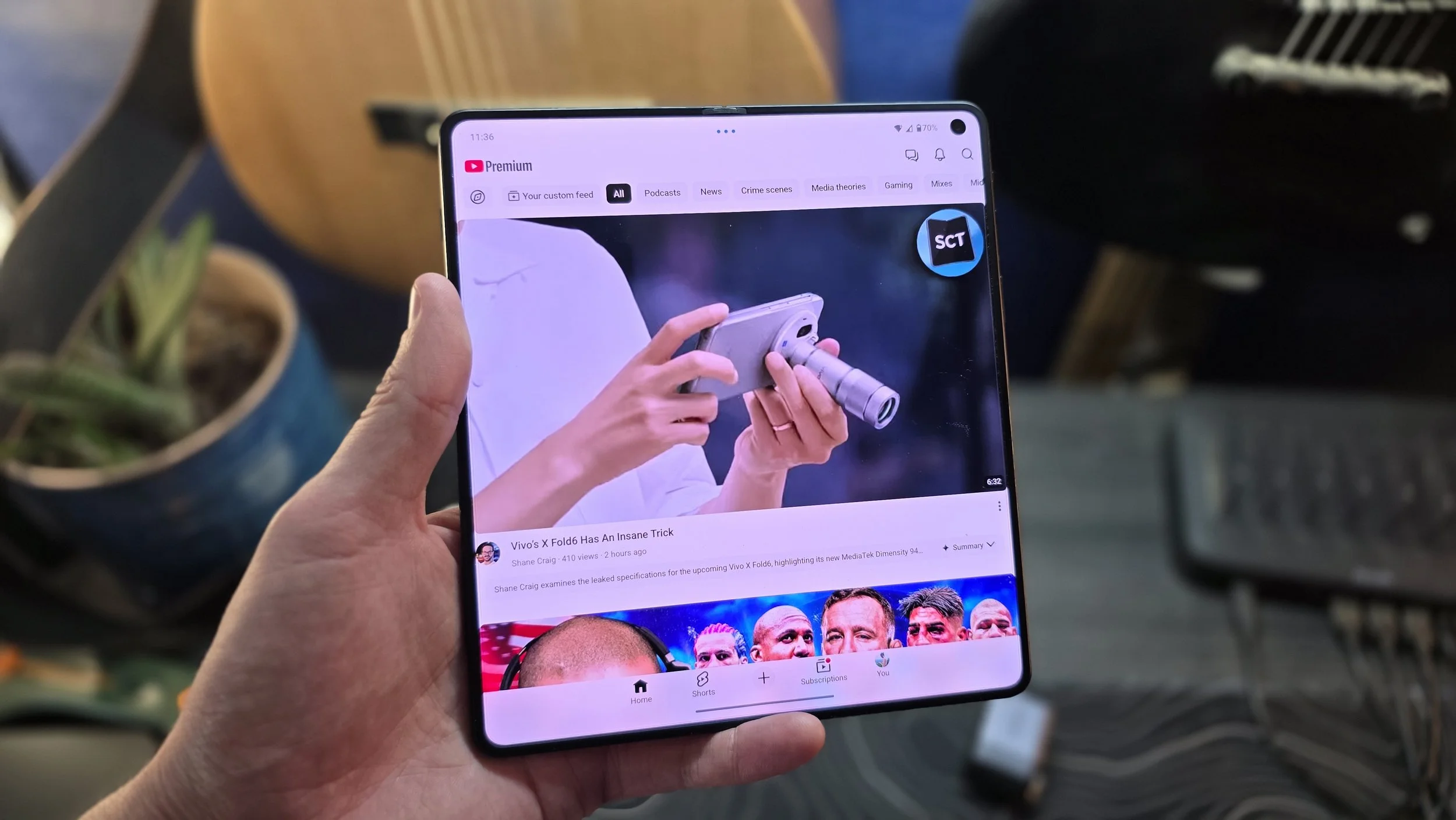
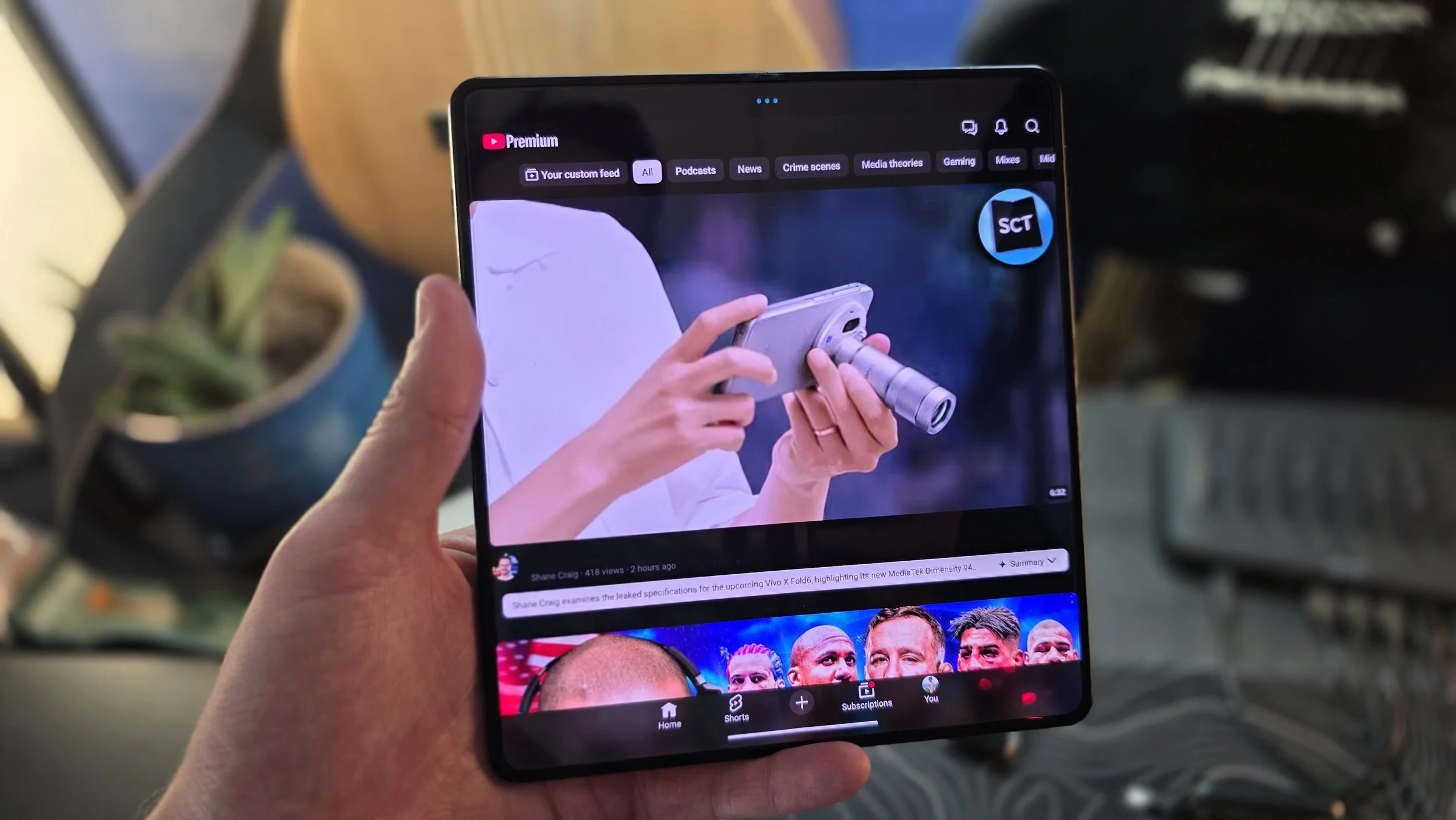
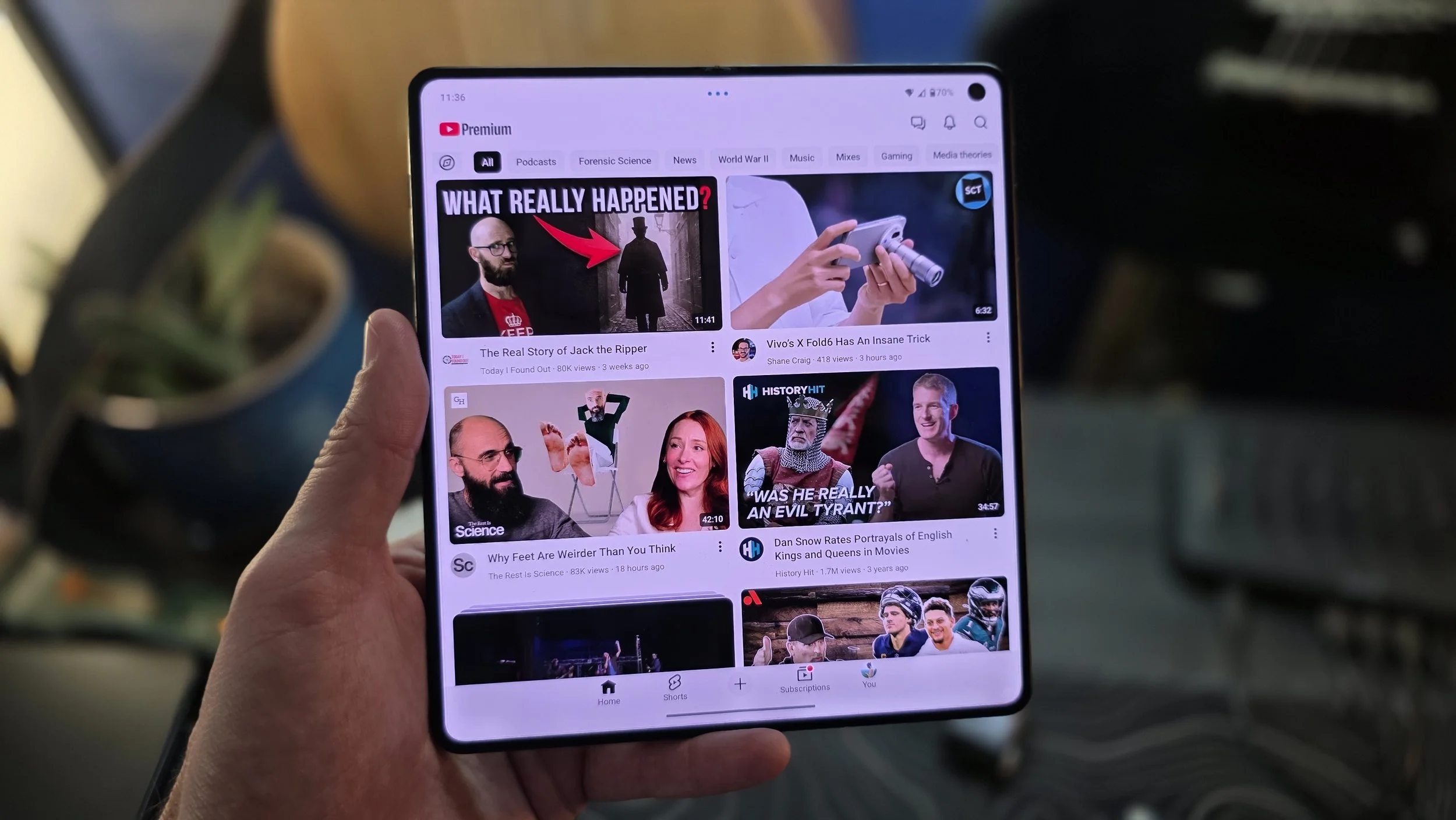
It’s Not Just Layouts, Themes Are Broken Too
This failure to adapt extends beyond physical screen dimensions into daily software behavior, specifically with light and dark modes.
If you set your system theme to a standard sunrise/sunset schedule, YouTube struggles to keep up. If the sun comes up and the OS switches to light mode, but you happen to open YouTube after it previously initialized in dark mode, the entire UI breaks down. The app gets stuck in a visual limbo until you force close it, sometimes multiple times, just to get the interface to correctly display the current system theme.
Leading by Example?
This initiative formally began with Android 12L, half a decade ago. Five or six years is an eternity in mobile tech, yet Google still has not managed to get its own premium video platform to dynamically scale on its own operating system.
It raises a massive, unavoidable question, how can Google expect third-party developers to prioritize adaptability when Google itself refuses to complete the work?
This software stagnation is especially dangerous right now. Apple is inevitably looming with its own rumored entry into the foldable space. While we do not know exactly how iOS will handle the transition of phone apps to a larger display, history suggests Apple will ensure its own core apps work flawlessly on day one.
Building on an Unset Foundation
Instead of polishing the foundation, Google is sprinting ahead to the next shiny object. We are now seeing the arrival of the Googlebook, a push for full laptops running an Android-based OS designed to replace the Chromebook era.
The time to perfect adaptive apps was a couple of years ago, when foldables were establishing their footing. Now, Google is selling premium foldables and spearheading an entire laptop platform powered by mobile software, all while a staple app like YouTube cannot handle a basic screen transition or a scheduled theme change.
Google has a chronic tendency to start building the house before the concrete in the foundation has even cured. Pushing Android onto laptops is a bold, exciting vision, but if the core apps cannot even survive being unfolded on a phone, the structural integrity of this new ecosystem is already at risk.