Patents Reveal Continued Work on TriFold Design, S Pen Integration
After launching the TriFold only to be cancelled months later, rumors emerged that the TriFold 2 was on hold. However, Samsung appears to be continuing work behind the scenes. The tech giant is clearly not ready to give up on the idea and they are aggressively exploring multiple form factors to see what sticks.
The original Galaxy Z TriFold had a very short-lived lifecycle, launching only to be discontinued a few months later. Instead of rushing out a sequel, Samsung is trying to figure out how to move the design past its initial status as a "halo device," a product built mostly just to brag, show off engineering prowess and grab headlines without offering long-term practicality.
Two separate patents give us a glimpse into how Samsung might make a multi-fold device that people actually want to use every day.
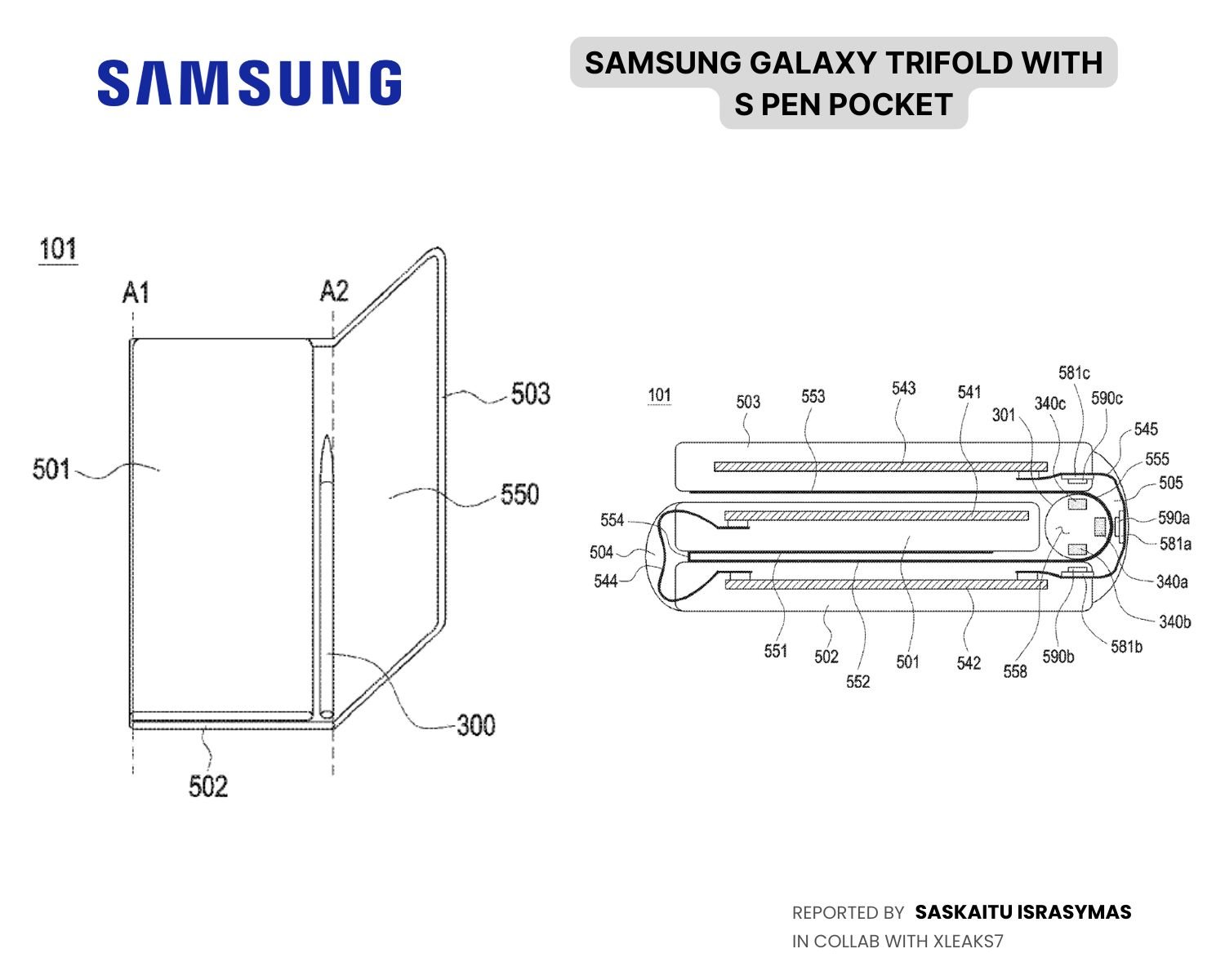
First, a patent reveals that Samsung is tackling the biggest disappointment of the first trifold, the lack of stylus support. The patent drawings show a clever new way to store an S Pen right inside the hinge area of a multi-folding phone. The concept relies on magnets to hold the pen securely, built-in sensors to detect when it is docked and internal wireless charging. Since the first trifold left out the digitizer layer to keep things thin, this indicates Samsung is still heavily exploring stylus integration for its massive screens.
The active stylus approach is likely the path forward. By moving toward a powered, active pen, Samsung can bring the pen experience to ultra-thin flexible screens without needing a heavy, traditional digitizer layer underneath. This aligns with ongoing reports that Samsung is trying to solve the stylus dilemma across its entire premium foldable lineup.
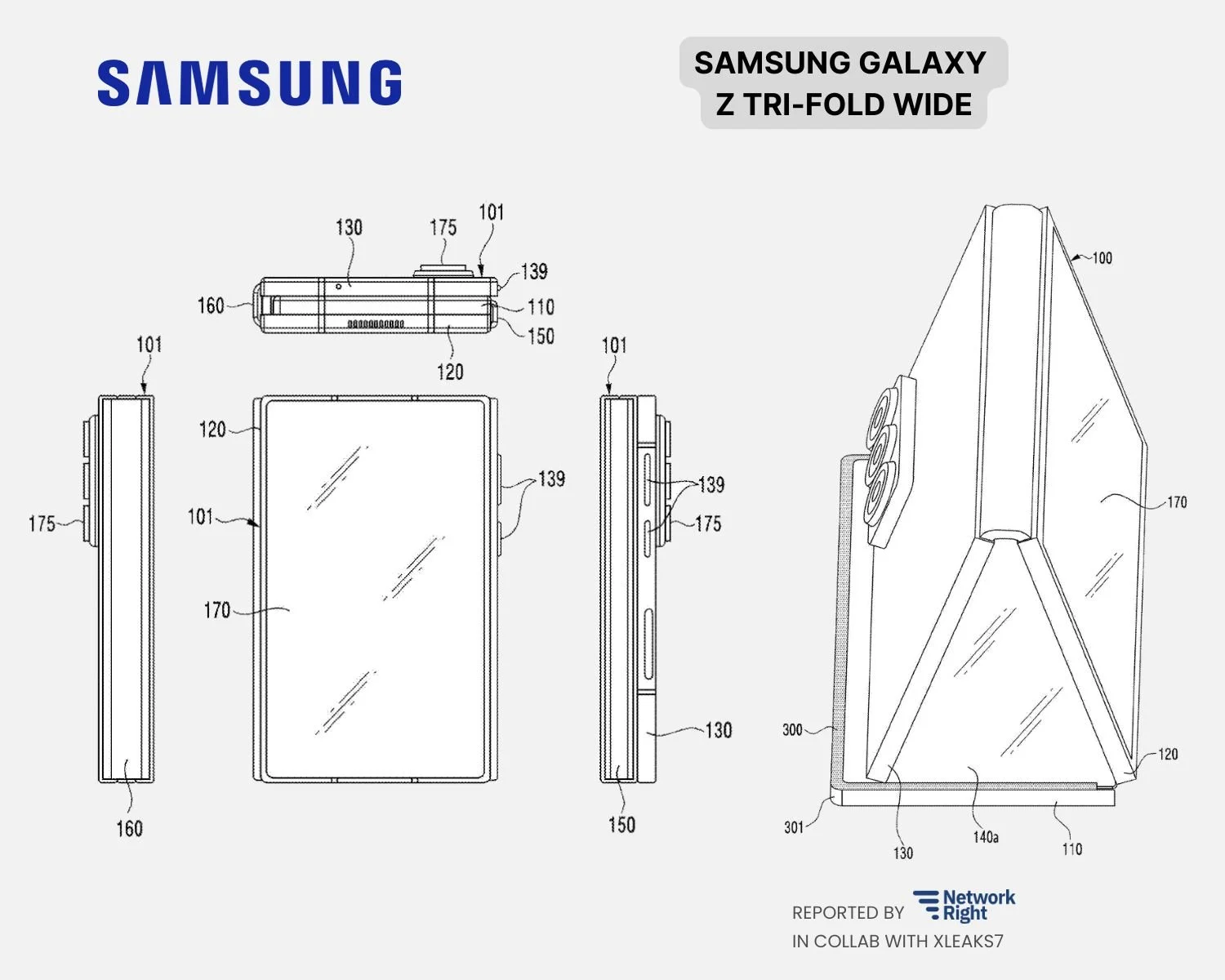
The second piece of the puzzle comes from a patent which shows Samsung exploring an entirely different layout, a "TriFold Wide" form factor. The original device was criticized for being awkwardly tall and narrow when closed. This new design opts for a shorter, much wider chassis. When folded, it looks like a standard, comfortable smartphone. When fully opened, it transforms into a wider, media-friendly tablet orientation that makes way more sense for watching videos and multitasking.
Between a wider screen layout and a hidden magnetic garage for a stylus, Samsung is clearly sketching out a much more mature second attempt at the multi-fold market.
We have to keep our expectations in check. These are patents, and patents more often than not simply do not become full commercial products. Companies file designs constantly to protect their ideas, explore engineering theories and cover their bases. While it is exciting to see Samsung brainstorm a wider screen and a built-in active stylus pocket, there is no guarantee this exact hardware will ever hit store shelves. For now, it is just a fascinating look at how the tech giant hopes to evolve its experimental hardware into something truly useful.